
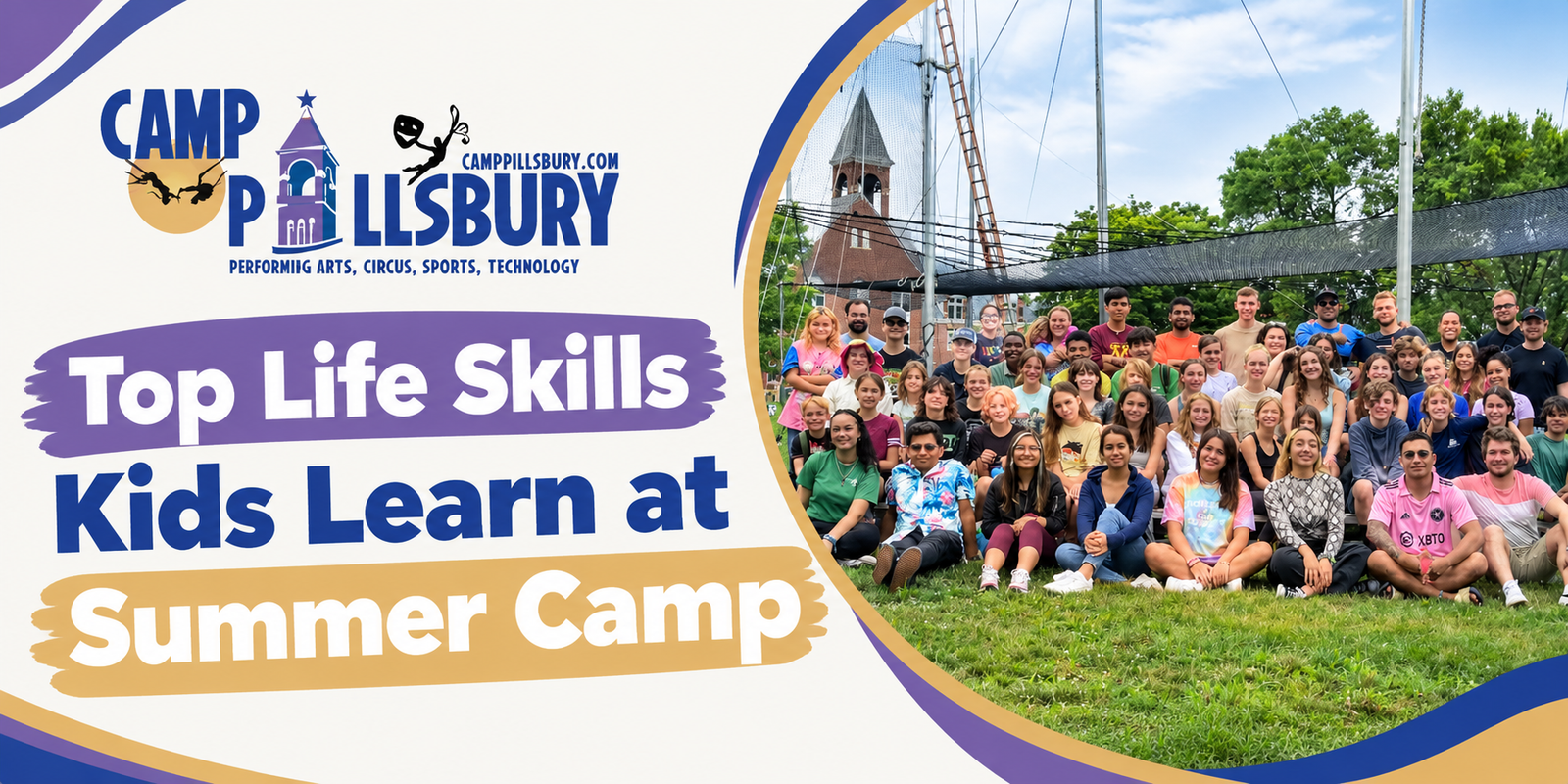
At Camp Pillsbury in Owatonna, Minnesota, campers develop essential life skills through fun, guided by passionate professionals from around the world. This guide covers the top skills kids learn at a life skills summer camp like Camp Pillsbury.
Making Their Own Choices
At Camp Pillsbury, campers design their own schedule. There are no assigned programs. Each day has six one-hour periods: three majors and three minors. Majors are chosen at the start of a session, and minors are chosen every day. Campers pick on Sampler Day, the first Monday of each session, when everyone is introduced to every activity.
This lets campers develop existing skills and explore new interests.
Trying Something New
Minors are a great way to try something new and fun. Campers are always welcome in an activity even if they have never done it before, and every activity is open to all age groups and skill levels. The camp works with each camper to meet their distinctive needs and respects their individuality. Programs are led by experienced professionals in each field.
The choices include musical theater, music, dance, fine arts and crafts, culinary, circus arts, technology and digital arts, horseback riding, magic, role-playing games, extreme sports, sports, water sports, robotics, and podcasting. View more Activities
Culinary arts includes nutrition, preparation, cooking, baking, and presentation of many different types of cuisines. Technology and digital arts include computer programming, movie making, photography, podcasting, web design, game design, and graphic design. Music includes voice lessons, music production, instrument lessons, piano lessons, and vocal ensemble.
Practice, Focus, and Staying With It
Majors are usually rehearsal or practice, where campers hone their skills, get better at them and perform at the end of the session.
The circus program shows this well. Juggling helps with hand-eye coordination, concentration, rhythm, and timing, and campers move from beanbags or balls to rings or clubs little by little. Unicycling builds coordination and constant effort, with steady practice leading toward balance. The Spanish web focuses on strength, endurance, and concentration, and lyra builds core strength and balance. Camp Pillsbury describes the circus arts as a way to build resilience and continued growth.
Confidence on Stage
Campers also learn to share their work. Performance Day is when campers take the stage and show what they have learned, from music and theater to art and more.
At Camp Pillsbury, a confidence-building summer camp, campers practice a major during the session and then perform at the end of it.
Teamwork and Friendship
Camp Pillsbury focuses on helping campers become confident, positive leaders through creativity, teamwork, and personal development. The goal is to help campers discover their strengths and build character. The camp says it wants to inspire young people to support others, believe in themselves, and become positive influences in the world.
Teamwork shows up in everyday camp life. Majors are taken at the same time each day with the same staff and campers, so groups work together toward a performance. Camp Pillsbury welcomes children from the U.S. and around the world, and campers share dormitory accommodations with new friends. Campers live in dorm rooms with two to three campers per room, and they can request a friend as a roommate. The camp also says campers create memories and friendships here, and that fun, friendship, and new skills are what camp is about.
Adventure Days
Each session includes an Adventure Day, when regular activities stop and campers take a chaperoned trip. Past trips include Mall of America, Valley Fair, movies, rafting, cave tours, and a Minnesota Twins game. Camp Pillsbury covers the cost of admission and transportation.
Leadership and Communication
Older campers can take this a step further. The Counselor in Training Leadership Program is designed for older campers who want to move from camper to counselor or learn what it takes to be a strong and effective leader. Campers in the program learn communication techniques and group dynamics while developing their observational and listening skills.
To join, campers must be at least 15 years old at the start of their session, have leadership skills, and have a high skill level in the activity they want to assist with. First-year CITs assist for one period a day, second-year CITs for two periods, and third-year CITs for three periods.
What to Look For in a Life Skills Summer Camp
At Camp Pillsbury, the skills come from the daily schedule itself: choosing activities, practicing a major, performing, working in a group, and, for older campers, learning to lead.
Camp Pillsbury also shares student written and video testimonials, which you can find on the testimonials page.
Ready to Give Your Child a Summer of Growth?
Camp Pillsbury is a coed sleepaway camp and life skills summer camp for kids and teens ages 6 to 17, and it also offers day camp. Enroll now to get started.


