Circus Camp for Kids: More Than Just Fun and Games
When parents hear “circus camp for kids,” the first image that usually comes to mind is entertainment – kids swinging around and having a good time. That’s true, but it’s only part of the picture. Circus and aerial arts programs, especially ones built around flying trapeze and aerial disciplines, tend to build skills that go well beyond the physical: confidence, focus, and a willingness to try things that feel a little scary at first.
At Camp Pillsbury in Owatonna, Minnesota, circus is one of our core programs alongside performing arts, sports, and technology, and it’s consistently one of the activities campers get most excited about.
What Trapeze Camp Benefits Actually Look Like
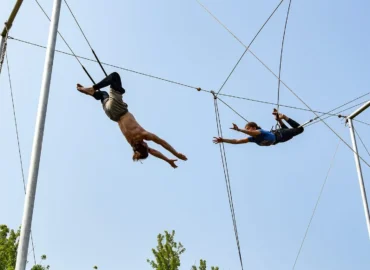
Trapeze camp benefits aren’t just about learning a trick. Working on a flying trapeze requires a camper to trust their own body, follow instructions closely, and push past initial hesitation – all skills that carry over well beyond the rig.
- Physical strength and coordination: Grasping the bar, swinging, and timing a release all demand core strength, grip strength, and body awareness that develop naturally over repeated practice.
- Confidence through small wins: Trapeze skills build in stages, so campers experience a steady string of small accomplishments rather than one all-or-nothing moment. That structure tends to build genuine confidence rather than a fear of failure.
- Trust and focus: Every trapeze session involves listening carefully to an instructor’s cues and trusting the process, especially in the moments right before letting go of the bar. That combination of focus and trust is part of what makes the activity feel so rewarding once a camper lands a new trick.
Aerial Arts for Children: Beyond the Trapeze
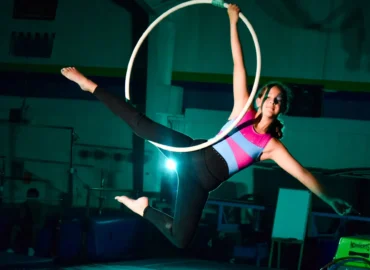
Aerial arts for children cover more than trapeze alone. At Camp Pillsbury, our circus program also includes aerial silks, the lyra (aerial hoop), and Spanish web, along with juggling and other circus disciplines.
- Aerial silks: ask campers to climb, wrap, and hold poses using fabric suspended from above, building upper body strength and flexibility.
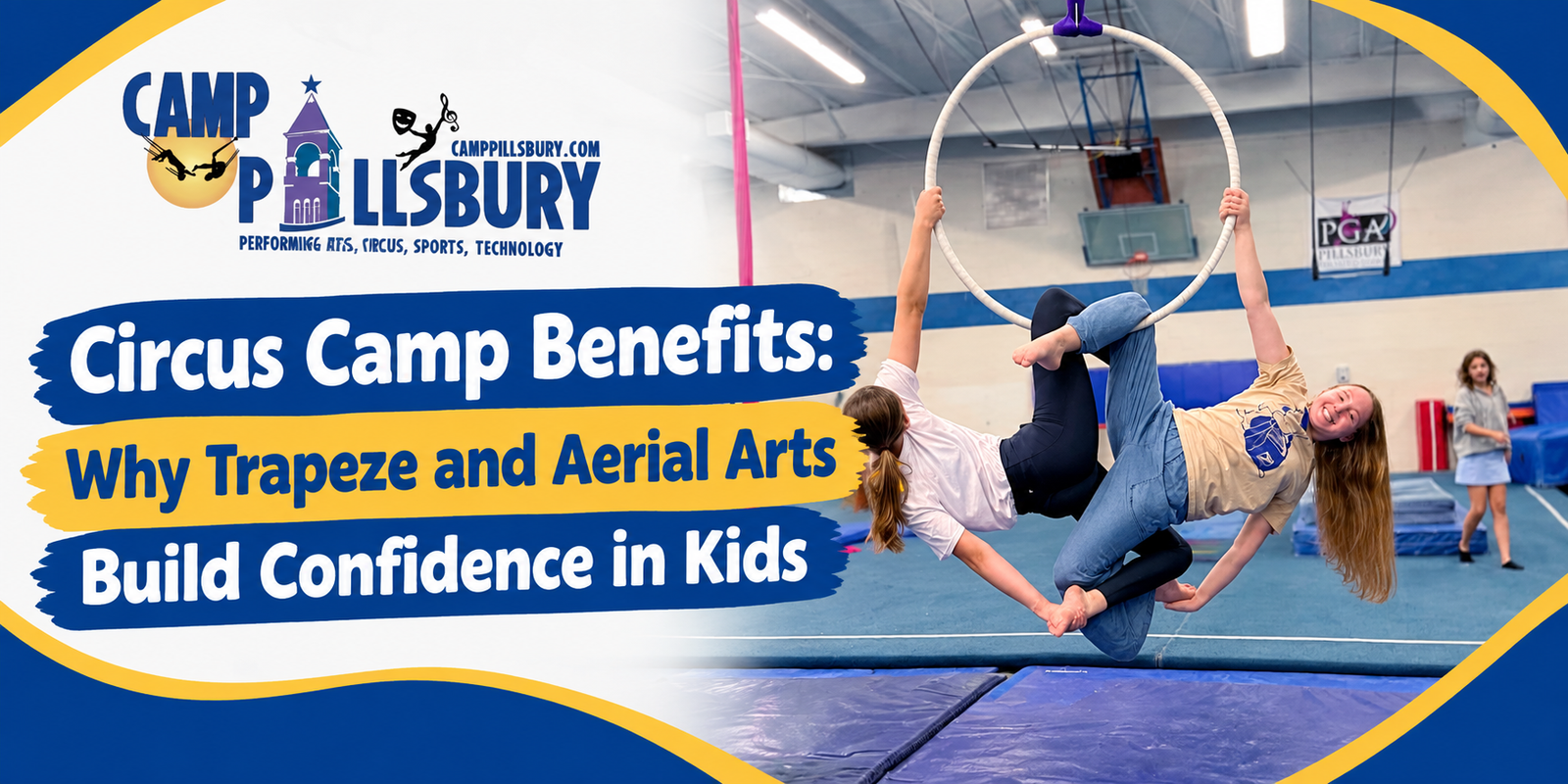
- The Lyra: a large circular hoop challenges campers to balance and move through poses and sequences, improving core strength and control.
- Spanish web: involves climbing and performing spins on a vertical rope with safety lines in place, building endurance and concentration.
Each discipline works different muscle groups and different mental skills, which is part of why circus programs tend to hold kids’ attention longer than a single repetitive activity might. Campers can explore multiple disciplines rather than being locked into just one.
Why Confidence Is the Real Takeaway
Across almost every circus and aerial discipline, the pattern is similar: campers face something that looks intimidating at first, break it down into smaller steps with an instructor’s guidance, and eventually master it. That process, more than any single skill, is what tends to stick with kids long after camp ends.
Performing in front of others is part of that too. At Camp Pillsbury, campers get the chance to showcase what they’ve learned during Performance Day, a structured event where kids from music, theater, art, and circus programs take the stage to share their progress. For a camper who’s spent weeks working on a trapeze routine or an aerial silks sequence, that moment of performing in front of family and friends is often where the confidence really clicks into place.
Is Circus Camp Right for Every Kid?
Circus and aerial programs work well for beginners and more experienced campers alike, since skills are introduced in stages and instructors adjust based on where each camper is starting from. A camper who’s never touched a trapeze bar before can progress right alongside one who’s had prior gymnastics or dance experience, since the program meets kids where they are rather than assuming a starting skill level.
If you’re still deciding whether your camper is ready for overnight camp in general, our guide on overnight camp readiness walks through the signs to look for.
That flexibility is part of what makes circus camp appealing to a wide range of kids, not just the ones who already think of themselves as “sporty” or “artistic.” Many campers discover an interest in aerial arts they didn’t know they had simply by trying it in a low-pressure setting. Some kids come in already comfortable with gymnastics or dance and pick up the movement vocabulary quickly, while others start with zero experience and end up surprising themselves by the end of the session.
There’s also a social side to circus programs that’s easy to overlook. Trapeze and aerial disciplines often involve waiting your turn, encouraging fellow campers through a tricky skill, and celebrating each other’s progress. That shared experience of working through something challenging together tends to build friendships quickly, since campers are cheering each other on rather than competing against one another.
How Circus Camp Fits Into a Full Summer
At Camp Pillsbury, circus is one of several minor campers can choose alongside their daily majors, which means kids can build a summer that includes circus arts without it being their only focus. A camper might spend part of the day working on a major like music or sports, then head to the circus program in the afternoon to work on trapeze or aerial silks. That variety keeps the days from feeling repetitive and gives campers a chance to explore interests they might not get to try at home.
See the Full Circus Program
If your camper is curious about flying trapeze, aerial silks, juggling, or any of our other circus disciplines, our circus camp in Minnesota page walks through the full program in more detail.
Ready to give your child a summer built around confidence, creativity, and new skills? Enroll Now to reserve a spot in this summer’s circus program at Camp Pillsbury.